





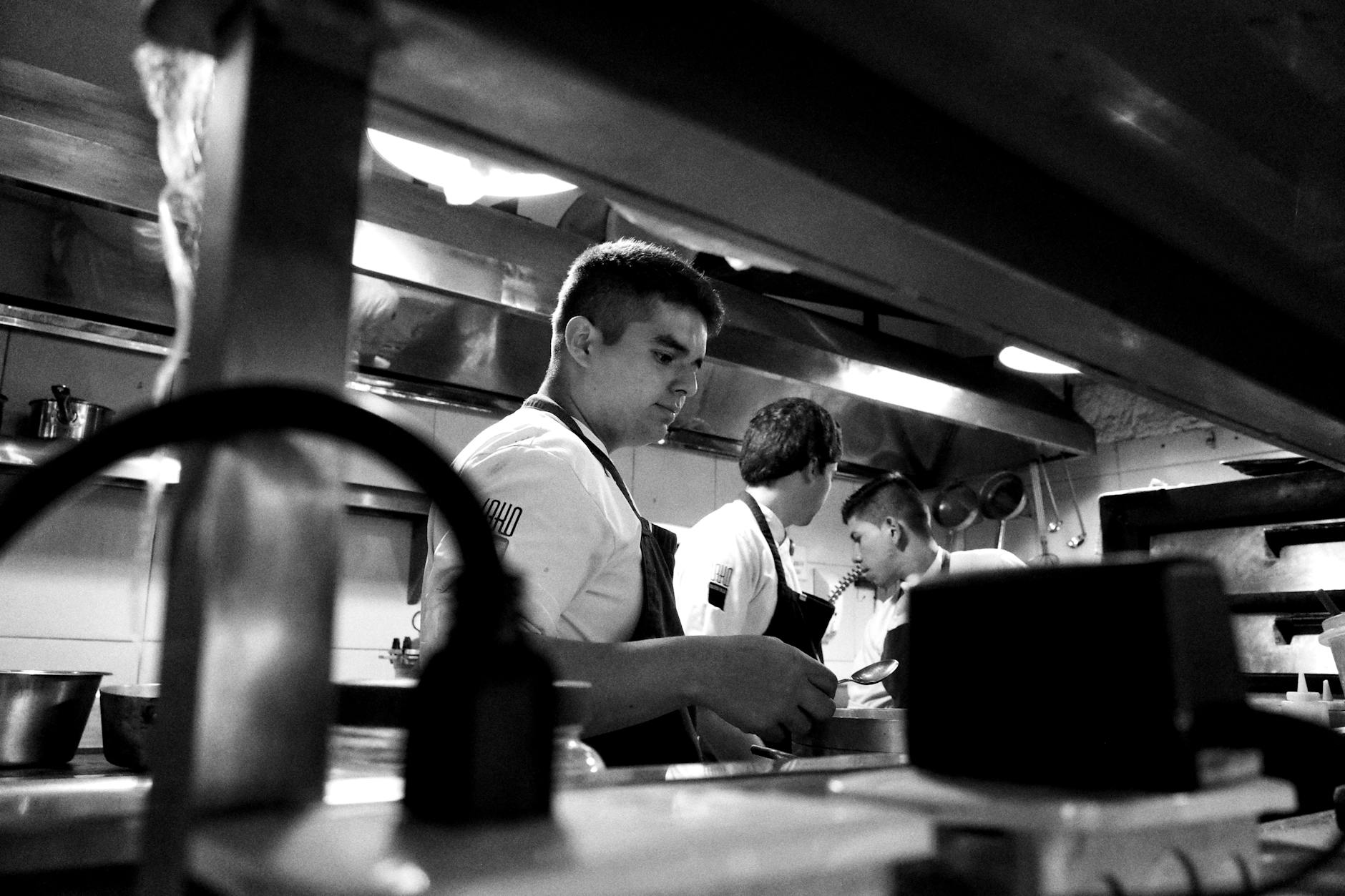
Restaurant kitchens operate like military units during dinner rush – every second counts, every miscommunication costs money, and chaos lurks behind every missed order. While enterprise teams have Slack, Microsoft Teams, and dozens of collaboration tools, restaurant workers still rely on shouting across noisy kitchens, scribbled notes, and WhatsApp groups that nobody checks.
Now, a group of former Slack executives believes they’ve found the solution. Led by former Slack VP of Engineering Sarah Martinez and former Head of Product David Chen, the team launched Mesa Communications in early 2024, building what they call “mission-critical communication tools designed specifically for restaurant operations.”
The timing couldn’t be better. The restaurant industry faces a perfect storm of challenges: chronic understaffing, high turnover rates exceeding 80% annually, and increasingly complex operations spanning delivery apps, catering orders, and in-person dining. Traditional communication methods that worked when restaurants were simpler operations now create bottlenecks that cost real money.
Why Slack Veterans Chose Restaurants Over Enterprise
Martinez spent six years at Slack watching enterprise teams transform their workflows with digital communication tools. But during the pandemic, while ordering takeout from her favorite San Francisco restaurants, she noticed something striking: these businesses handling hundreds of orders per hour were still coordinating through the same analog methods restaurants used decades ago.
“I watched a server at my local Thai place running back and forth to tell the kitchen about modifications, special requests, and timing needs,” Martinez explains. “Meanwhile, I’m sitting there knowing we solved this exact problem for software teams years ago.”
The revelation deepened when Martinez and Chen began interviewing restaurant operators. They discovered that communication breakdowns directly impact revenue in ways that don’t exist in typical office environments. A missed allergy notification can shut down a table for an hour. Poor coordination between front-of-house and kitchen staff creates delays that ripple through the entire evening service.
Restaurant profit margins, typically between 3-5%, mean that even small efficiency gains create meaningful financial impact. Unlike enterprise software sales cycles that take months, restaurant owners facing immediate operational pain make decisions quickly when they see solutions that work.
Chen, who led product development for Slack’s small business segment, recognized the opportunity immediately. “Enterprise teams can afford to have a two-minute delay in communication,” he notes. “In a restaurant kitchen during Saturday night rush, two minutes means the difference between success and disaster.”
Building for Chaos, Not Conference Rooms
Mesa’s approach differs fundamentally from adapting existing business communication tools for restaurants. The team studied how information flows in high-pressure food service environments, discovering that restaurant communication patterns are unlike any other industry.
Kitchen staff work with their hands constantly, making smartphone-based messaging impractical. Audio communication needs to cut through industrial equipment noise, grease trap fans, and dinner conversation. Information must be actionable immediately – not stored for later review like typical workplace messages.
The Mesa platform centers around voice-first communication optimized for kitchen acoustics. Staff wear lightweight wireless earpieces that filter background noise while amplifying important messages. The system integrates directly with point-of-sale systems, automatically routing order modifications and special requests to relevant team members.
“We’re not trying to recreate Slack for restaurants,” Martinez emphasizes. “We’re building something entirely new based on how restaurants actually operate.”

The technical challenges proved substantial. Restaurants typically lack robust Wi-Fi infrastructure, making traditional cloud-based communication unreliable. Kitchen environments destroy consumer electronics within weeks. Staff turnover means any system requiring extensive training fails immediately.
Mesa’s hardware uses industrial-grade components designed for commercial kitchen conditions. The software requires minimal setup – new employees can start using the system within minutes rather than hours or days of training typical with enterprise tools.
Early pilot programs at restaurants in San Francisco and Austin showed immediate results. Average order fulfillment times decreased by 12%, while customer satisfaction scores improved as communication errors dropped significantly.
The Broader Restaurant Technology Revolution
Mesa enters a restaurant technology landscape undergoing rapid transformation. The pandemic accelerated digital adoption across the industry, but most innovation focused on customer-facing features: online ordering, delivery integration, and contactless payment systems.
Operational tools remained largely unchanged, creating a technology gap between customer experience and internal workflows. While diners expect seamless digital experiences, restaurant staff often coordinate using methods that haven’t evolved in decades.
This mirrors broader trends in specialized industry software. Just as AI recipe startups are partnering with major grocery chains to transform food retail, restaurant technology companies are discovering that industry-specific solutions outperform generic business tools adapted for specialized use cases.
Martinez points to successful vertical software companies in other industries. Construction, healthcare, and logistics all have specialized communication tools that understand industry workflows, regulatory requirements, and operational constraints. Restaurants, despite being one of the largest service industries, remained largely underserved by purpose-built technology.
The potential market size attracts attention from investors familiar with Slack’s trajectory. The United States alone has over 660,000 restaurants, with the majority being independent operators who lack resources for complex technology implementations but desperately need operational efficiency improvements.
Mesa raised a seed funding round led by Andreessen Horowitz in late 2024, with participation from several restaurant industry veterans who serve as advisors. The company plans to expand beyond communication into broader operational coordination, potentially including inventory management, staff scheduling, and supplier coordination.
Scaling Communication Solutions Across Food Service
Early adoption comes primarily from mid-sized restaurants – operations too large for purely analog coordination but too small for enterprise-level solutions. These restaurants, typically generating annual revenue between two and ten million dollars, face the most acute communication challenges while having limited resources for technology experimentation.
Mesa’s pilot customers include diverse restaurant types: fast-casual chains expanding rapidly, fine dining establishments coordinating complex multi-course services, and food halls managing multiple vendors under one roof. Each environment presents unique communication challenges that generic business tools struggle to address.

The company faces competition from established restaurant technology providers expanding into communication features, as well as new startups recognizing the same market opportunity. However, Martinez and Chen believe their deep understanding of both communication software and restaurant operations provides sustainable competitive advantages.
Future development focuses on predictive features that anticipate communication needs. The system could automatically alert kitchen staff about approaching rush periods based on reservation data, or notify servers about delayed orders before customers become frustrated. Machine learning algorithms analyze communication patterns to identify potential bottlenecks before they impact service.
Mesa also explores expansion into adjacent industries with similar operational characteristics: catering companies, food trucks, and ghost kitchens all face comparable communication challenges in fast-paced, high-stakes environments.
The restaurant industry’s chronic labor shortage makes operational efficiency tools increasingly critical. As wages rise and qualified staff becomes scarcer, restaurants must maximize productivity from existing teams. Communication tools that reduce errors, improve coordination, and streamline workflows provide immediate value that justifies technology investments.
Martinez predicts that within five years, purpose-built communication systems will become as essential for restaurants as point-of-sale systems are today. “Every restaurant will have digital communication infrastructure designed specifically for food service operations,” she forecasts. “The question isn’t whether this transformation happens, but which companies build the tools that define the industry’s future.”
Frequently Asked Questions
Why don’t restaurants use existing business communication tools?
Restaurant environments require voice-first communication that works through kitchen noise and doesn’t interfere with food preparation tasks.
What makes Mesa different from Slack or Teams for restaurants?
Mesa uses industrial-grade hardware designed for kitchens and focuses on immediate, actionable communication rather than message storage and collaboration features.