




Travel content creators face a fundamental choice: capture sweeping aerial perspectives or document ground-level adventures in extreme detail. The DJI Mini 4 Pro and GoPro Hero 12 represent the pinnacle of their respective categories, each excelling in completely different scenarios that modern travelers encounter.
Both devices have revolutionized how we document our journeys, but they serve distinct purposes in a content creator’s toolkit. The Mini 4 Pro offers cinematic aerial footage previously reserved for professional film crews, while the Hero 12 delivers rugged versatility for action-packed adventures where traditional cameras would fail.
Size, Weight, and Travel Practicality
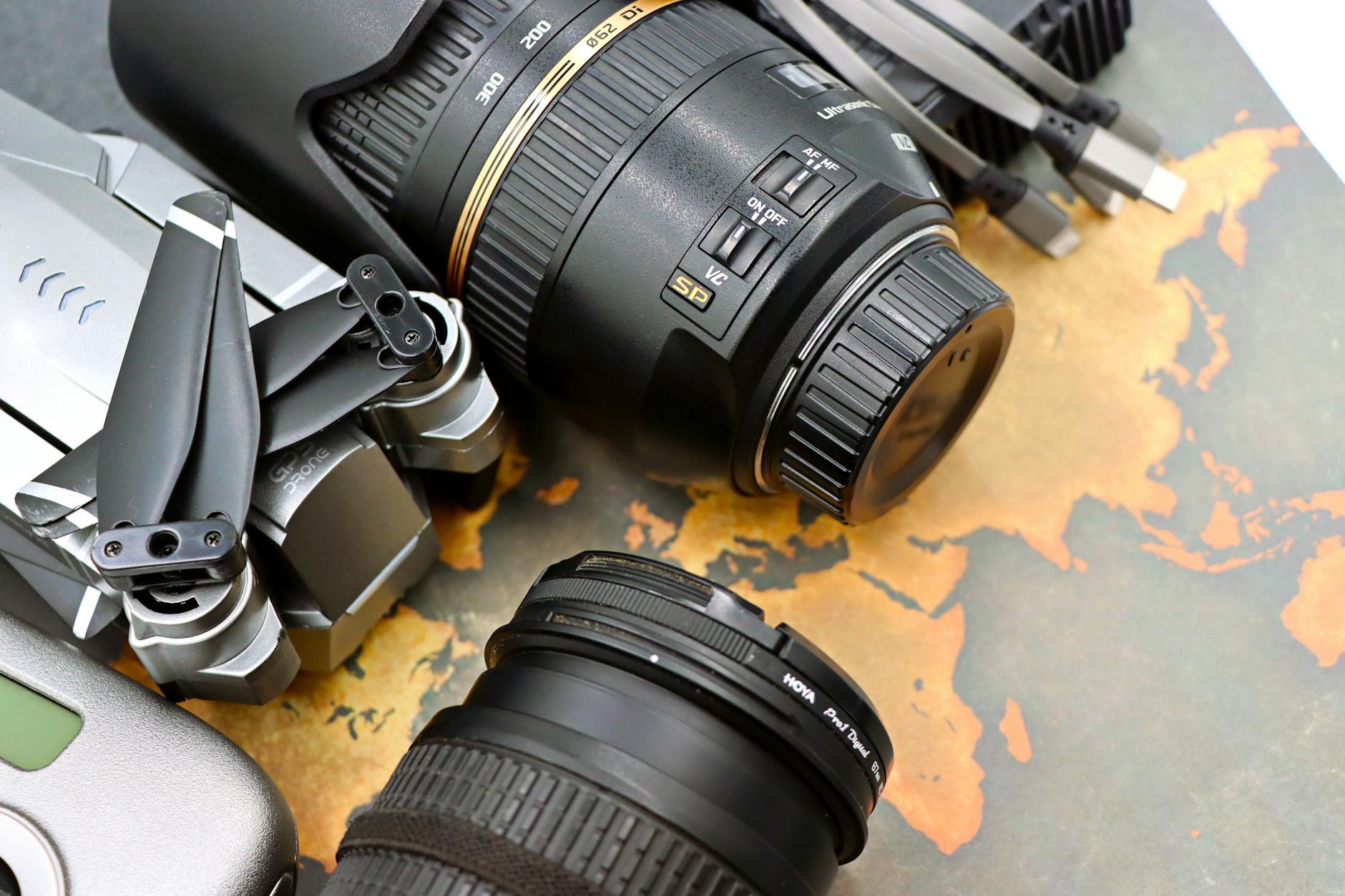
The portability factor separates serious travel gear from equipment that stays home. DJI’s Mini 4 Pro weighs 249 grams, deliberately staying under regulatory thresholds that trigger more complex drone registration requirements in many countries. This weight consideration proves crucial for international travelers navigating varying aviation rules.
The drone folds into a compact form factor, though it still requires dedicated case space and careful packing. Battery life delivers approximately 34 minutes of flight time per charge, but smart travelers carry multiple batteries, adding weight and bulk to luggage.
GoPro’s Hero 12 tips the scales at just 154 grams and measures roughly the size of a smartphone. Its minimal footprint means it disappears into any travel bag, backpack pocket, or even clothing. The rugged design handles harsh treatment that would destroy the Mini 4 Pro’s delicate gimbal mechanism.
For spontaneous content creation, the GoPro wins decisively. It powers on instantly and starts recording within seconds. The Mini 4 Pro requires setup time, airspace checks, and optimal weather conditions that don’t always align with travel schedules.
International travel regulations heavily favor the GoPro. While drone laws vary dramatically between countries and change frequently, action cameras face virtually no restrictions. Content creators can film freely in most locations without permits or legal concerns.
Video Quality and Creative Capabilities
Both devices capture stunning 4K footage, but their strengths diverge dramatically based on shooting scenarios. The Mini 4 Pro’s three-axis mechanical gimbal produces impossibly smooth footage even in moderate wind conditions. Its aerial perspective transforms ordinary landscapes into cinematic masterpieces.
The drone’s camera sensor excels in optimal lighting conditions, delivering rich colors and sharp detail that rivals professional equipment. Advanced flight modes like ActiveTrack and Point of Interest create complex camera movements automatically, perfect for solo travelers without camera operators.
However, the Mini 4 Pro struggles in challenging weather. Strong winds ground the aircraft, while rain or snow can damage sensitive electronics. Indoor filming remains impossible, and many iconic travel locations prohibit drone usage entirely.
The Hero 12’s HyperSmooth stabilization technology produces remarkably steady footage for a device without mechanical gimbal systems. While not matching the Mini 4 Pro’s silky smooth output, it delivers professional-looking results in scenarios where drones cannot operate.
GoPro’s strength emerges in extreme conditions and tight spaces. Waterproof to 33 feet without additional housing, it documents underwater adventures, storm conditions, and high-impact activities that would destroy aerial equipment. The ultra-wide lens captures immersive perspectives that pull viewers into the action.
Color science and low-light performance favor the Mini 4 Pro’s larger sensor, but the Hero 12’s recent improvements have narrowed this gap significantly. For bright, outdoor adventure content, both devices produce excellent results.
Practical Shooting Scenarios
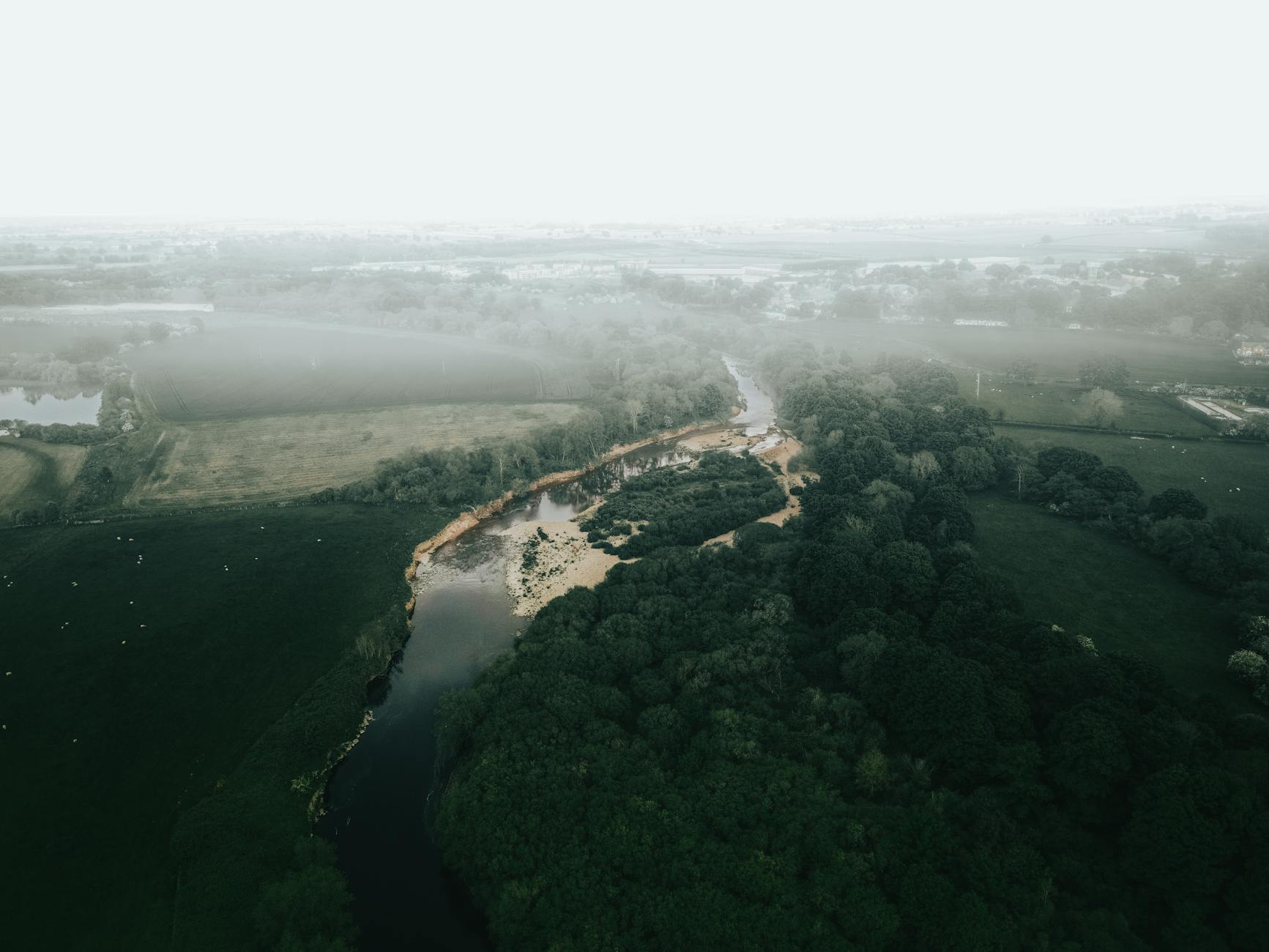
Real-world travel content creation reveals where each device truly shines. The Mini 4 Pro excels during golden hour landscape shoots, beach and coastal documentation, and establishing shots that provide geographic context. Its aerial perspective transforms familiar tourist destinations into fresh visual narratives.
Urban exploration benefits from drone footage, but flight restrictions often limit opportunities. Many cities, national parks, and tourist attractions prohibit drone operations, forcing creators to rely on ground-based equipment for the majority of their content.
The Hero 12 dominates in active travel scenarios. Hiking adventures, water sports, festival documentation, and intimate cultural experiences all benefit from its compact, unobtrusive presence. The camera disappears into social situations where larger equipment would create barriers between creators and subjects.
Time-lapse capabilities differ significantly between devices. The Mini 4 Pro creates stunning hyperlapse sequences with smooth camera movements across vast distances. The Hero 12’s time-lapse features work well for stationary subjects but lack the dynamic movement that aerial platforms provide.
Battery management strategies vary between devices. The Mini 4 Pro requires careful flight planning and multiple battery swaps during extended shooting sessions. The Hero 12’s longer recording times and faster charging make it more suitable for all-day documentation without complex power management.
Storage considerations also impact travel workflows. Both devices support high-capacity microSD cards, but the Mini 4 Pro’s higher bitrate 4K footage consumes storage faster. As highlighted in our recent comparison of Canva Pro vs Adobe Creative Suite for Small Agencies, content creators need robust post-production workflows regardless of capture device.
Cost Analysis and Value Proposition
The financial investment extends beyond initial device purchase prices. The Mini 4 Pro’s ecosystem requires additional batteries, memory cards, carrying cases, and potentially insurance for international travel. Replacement parts and repairs cost significantly more than GoPro equivalents.
Operating costs include potential permit fees for drone operations in certain locations, while GoPro users face virtually no ongoing regulatory expenses. The learning curve for drone piloting also represents a time investment that action camera users can skip.
Long-term value depends heavily on shooting style and travel preferences. Creators focused on sweeping landscape content and cinematic production values will extract maximum value from the Mini 4 Pro’s capabilities. Those prioritizing versatility, durability, and unrestricted access should invest in the Hero 12.

The Verdict for Modern Travel Creators
Neither device represents a universal solution for travel content creation. The Mini 4 Pro delivers unmatched aerial cinematography when conditions align, while the Hero 12 provides reliable documentation across any scenario travelers encounter.
Smart creators often invest in both devices, using each tool for its optimal purpose. The Mini 4 Pro captures establishing shots and sweeping vistas during favorable conditions, while the Hero 12 handles everything else – from intimate cultural moments to extreme weather documentation.
As travel content creation continues evolving, the integration of multiple capture devices into cohesive narratives becomes increasingly important. The most successful creators master both aerial and ground-based perspectives, using each tool’s strengths to create compelling travel stories that engage modern audiences across social media platforms.
The choice ultimately depends on personal shooting style, travel preferences, and tolerance for regulatory complexity. Both devices will continue improving, but their fundamental strengths – aerial cinematography versus rugged versatility – will likely remain unchanged as the travel content landscape evolves.
Frequently Asked Questions
Which is better for international travel – DJI Mini 4 Pro or GoPro Hero 12?
GoPro Hero 12 faces fewer travel restrictions and regulatory hurdles compared to drone equipment.
Can the DJI Mini 4 Pro match GoPro’s durability for adventure travel?
No, the Mini 4 Pro requires careful handling while GoPro Hero 12 withstands extreme conditions and impacts.